


 Lal Kapda
 Peela Kapda
 Bhagwa Kapda
 Safed Kapda
 Kaala Kapda
 Mata ki Chunri

 Kala Dhaga
 Peela Dhaga
 Yagyopavit
 Kamalgatta Mala
 Tulsi Mala
 Sphatik Mala
 Rudraksha Mala
 Kalawa
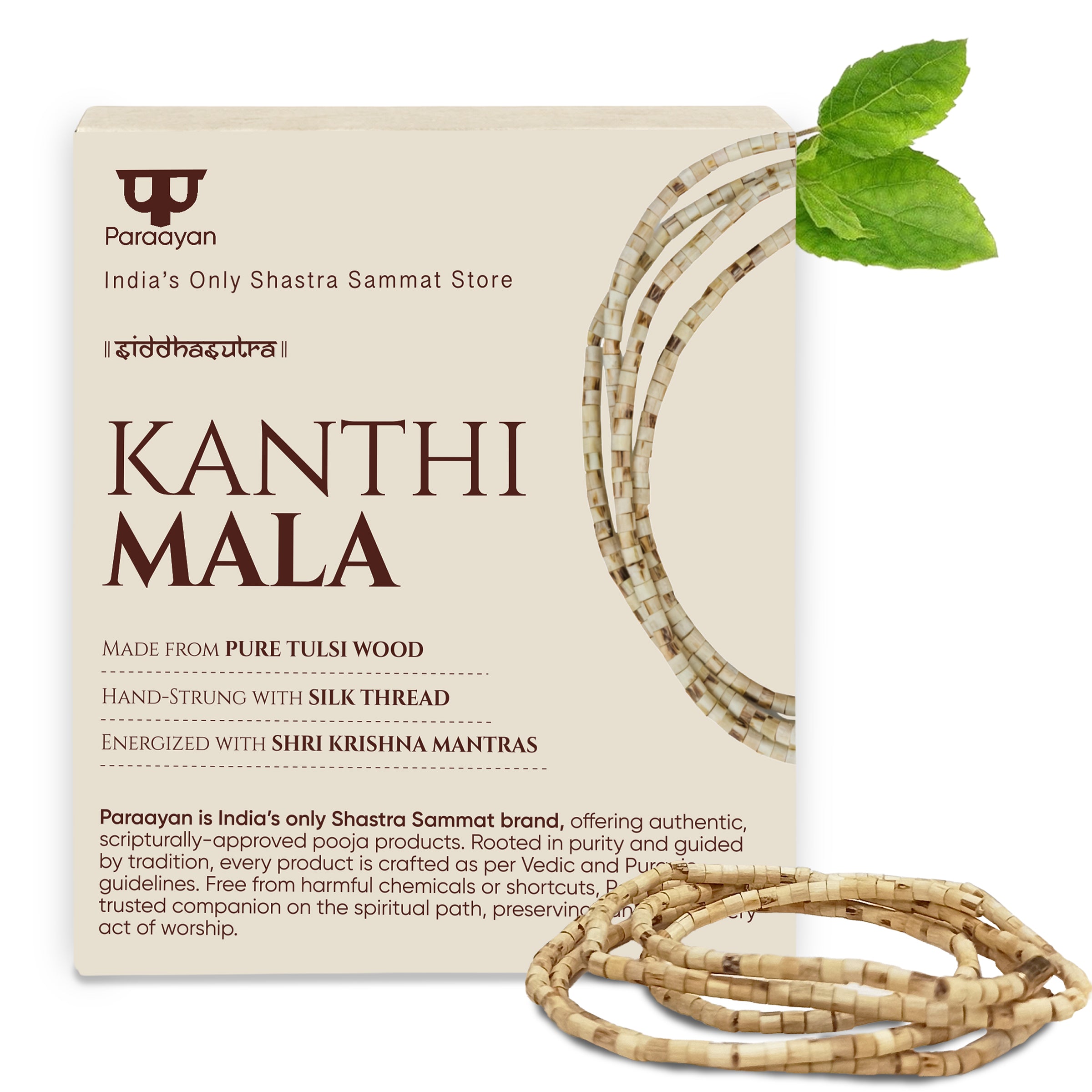 Tulsi Kanthi Mala
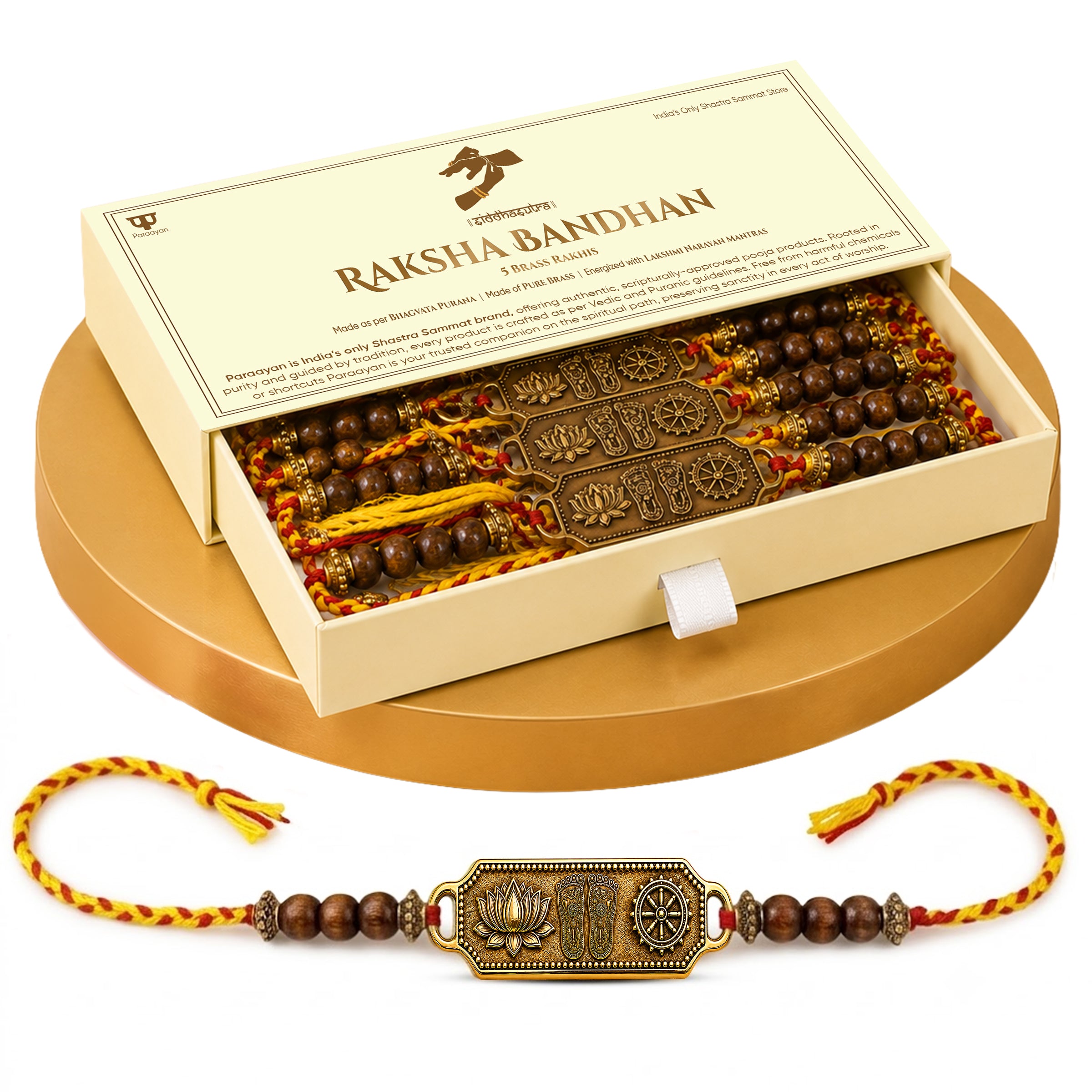 Brass Rakhi
 Ashtagandha Chandan
 Kumkum
 Bhasm Vibhuti
 Sindoor
  Gopi Chandan
 Gulal
Gulal
 Wet Dhoop
 Dhoop sticks
 Itra
Itra Dhoop Cones
 Akshat
 Long Cotton Wicks
 Navgrah Samidha
 Bhimseni Karpoor
 Pure Ghee Wicks
 Shodashratna Havan Samagri
  Long Cotton Wicks
 Round Cotton Wicks
 Shankha
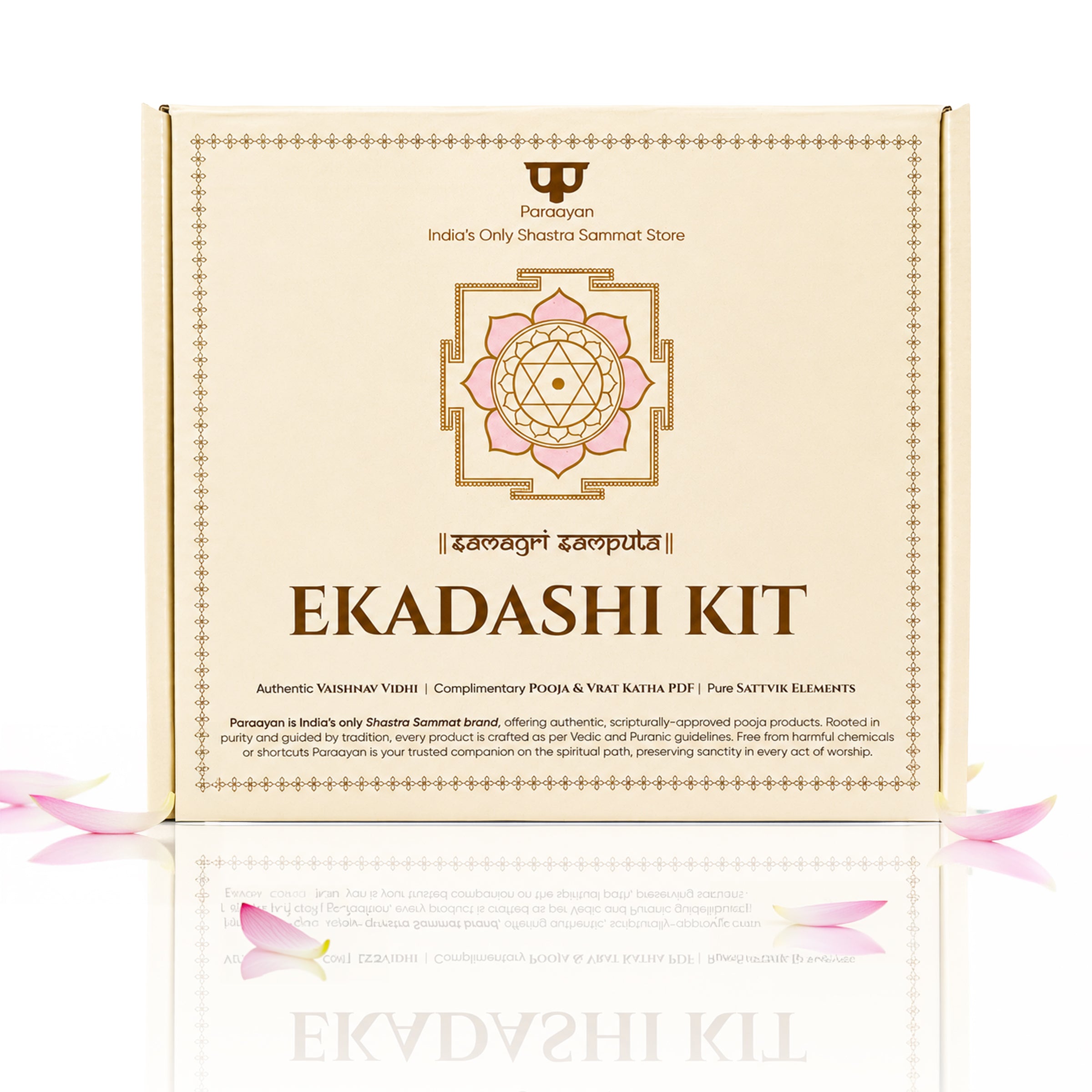 Ekadashi Puja Kit
 Ganesh Chaturthi Puja Kit
 Panchmeva
 Nakul dana
 Motichoor Laddo
 Mathura Peda
 Makhan Mishri
 Kuttu Ka Aata
 Honey
Honey Ghee
Ghee Besan Laddo
 Batasha
 Rajgira k Laddo
 Gangajal
 Kewar jal
 Rose Water
 Taila
Taila


Tilak as a Sacred Connector to the Divine
In the Sanatana tradition, the application of Tilak holds profound spiritual significance. It is not merely a symbol of faith but a sacred act that connects the individual to higher consciousness. The Atharvana Upanishad proclaims that one who adorns the Tilak resembling the divine feet of Bhagwan Krishna is drawn closer to the Paramatma, the Supreme Self. Similarly, the Brahmaratra enjoins devotees to mark their bodies with vertical Tilaks, affirming that such a practice leads the soul towards Sayujya Mukti, liberation through union with the Divine.
Sacred Points of Application and Ingredients
Tilak is traditionally applied to key energy centres, primarily the forehead, but also the chest, neck, and hands. These spots are chosen for their spiritual receptivity. Importantly, the materials used must be pure and natural. Sacred substances such as sandalwood paste, turmeric, cow dung ash, clay, charcoal, vermilion (kumkum), and the holy ash from sacrificial fires (vibhuti) are traditionally recommended. These elements are revered not only for their ritualistic value but also for their inherent sattvic (pure) nature.
Subtle Energies and Method of Application
The method of application carries its own spiritual implications. Tilak may be applied using the fingers or a metallic strip. Each finger is associated with specific subtle energies. For example, applying Tilak with the ring finger is said to induce calmness, while use of the middle finger is believed to support longevity. Such nuances are not arbitrary, they reflect a deep understanding of the human body and its spiritual anatomy.
A Path of Alignment Through Devotion
Thus, the practice of Tilak, when done with reverence and adherence to scriptural guidance, becomes a potent act of spiritual alignment.
Ajna Chakra and the Spiritual Centre of the Forehead
In the sacred traditions of Sanatana Dharma, the application of Tilak upon the forehead carries immense spiritual weight. It is most often placed between the eyebrows, at the spot revered as the seat of the Ajna Chakra, also known as the Third Eye. This centre is considered a gateway to subtle awareness, capable of lifting one beyond the confines of the physical realm into communion with the universal essence, Brahman. As described in Tantric scriptures, the forehead is the convergence point of three primary Nadis, Ida, Pingala, and Sushumna, making it a spiritually potent zone. When Tilak is applied here, it aids in refining thought, sharpening concentration, and calming mental agitation. Sages and ascetics have long borne Tilak as a mark of spiritual discipline and inner awakening.

A Symbol of Participation and Grace
Beyond its esoteric implications, Tilak is an emblem of auspiciousness and a visible expression of one’s participation in sacred observances. Within the Vaishnava tradition, devotees wear Tilaks as a humble offering to Bhagwan Krishna, believing it pleases the Lord and invites divine grace. Shaivite adherents, in contrast, use ash (Vibhuti) drawn from sacrificial fires or derived from sanctified sources such as burnt cow dung, sesame seeds, or brown rice. The ascetics among them, especially the Adi Yogis, may even use ash gathered from cremation grounds, signifying detachment and renunciation.
Transformative Power of Tilak
The act of donning Tilak is not ornamental, it is transformative. It attunes the wearer to spiritual vibrations, enhances inner focus, and reminds one of life’s higher purposes. Applied with devotion and scriptural understanding, Tilak becomes a sacred bridge to the Divine.
Sacred Substances and Their Benefits
Various forms of Tilak, when prepared and applied in accordance with tradition, offer distinct spiritual and physiological benefits.
- Sandalwood paste, when placed upon the forehead, is known to induce a gentle cooling sensation. As it dries, it draws one’s awareness towards the Ajna Chakra, the centre of intuitive perception. This placement stimulates the functioning of the pituitary and pineal glands. When used during meditation or the chanting of divine names, it enhances mental clarity and improves concentration. Sandalwood Tilak is also revered for its capacity to alleviate stress and soothe headaches.
- Vermilion (Kumkum), another sacred substance, is associated with inner radiance and vitality. Its application is believed to fortify the subtle energies of the mind, enabling one to meet life’s challenges with balance and strength. It also aids in deepening concentration and awakening latent spiritual faculties.
- Turmeric, with its well-regarded purifying qualities, is often used to prepare Tilak that nourishes the skin. It promotes mental calmness while gently fostering confidence and clarity in thought.
Distinct Tilak Forms Across Sampradayas
In the sacred traditions of Sanatana Dharma, the form and composition of Tilak vary across different spiritual lineages, each carrying deep symbolic and devotional significance. These marks not only identify the adherent’s spiritual allegiance but also serve as an act of reverence to the deity they worship. Among the followers of Bhagwan Krishna, especially within the Vaishnava tradition, Tilak is regarded as a sacred ornament of devotion.
Tilak Variations by Sampradaya
- Brahma Sampradaya, which encompasses the Madhva and Gaudiya traditions, observes different practices. Madhva followers draw two vertical lines using Gopichandana, a sacred clay from Dwarka, to represent the divine feet of Krishna. A black vertical line, drawn from the ash of yajna fires, is added between them. Gaudiya tradition followers, rooted in the teachings of Chaitanya Mahaprabhu, draw two vertical lines with the mud of Vrindavan, joined at the bridge of the nose to form a Tulsi leaf, an offering dear to Bhagwan Krishna.
- Kumara Sampradaya: The Tilak is shaped into a U, beginning from the bridge of the nose and extending upwards using Gopichandana. A black dot in the centre, formed from slate gathered from Barsana, symbolizes the divine presence of both Radha and Krishna.
- Rudra Sampradaya: A single vertical line in red, made using Kumkum, represents Yamuna Devi, while the deity worshipped is Govardhan, an incarnation of Krishna Himself.
- Sri Sampradaya: Two vertical lines are drawn using white mud from anthills or the base of the Tulsi plant, both considered sanctified. A red line between them, drawn from stones found in anthills, signifies the eternal presence of Lakshmi Devi.
Tilak in Shaiva Tradition
The practice of applying Tilak holds a sacred place within the spiritual framework of Sanatana Dharma. Particularly in Shaiva tradition, the use of sacred ash (Vibhuti) sourced from yajnas signifies the transient nature of worldly existence. It serves as a solemn reminder of mortality and the futility of attachment to material pursuits. When applied to the area between the eyebrows, the Tilak aligns with the Ajna Chakra, often referred to as the seat of inner vision. This alignment aids in deepening spiritual awareness and encourages communion with the Supreme Consciousness. Thus, Tilak becomes both a symbol of renunciation and a means of inner purification.


